Intro to Digital Design - An End to End Approach
This is a five-week course, with 30 hours of lectures. We expect the following prior knowledge from the students:
Converting a number between decimal, binary and hexadecimal representations
Basic knowledge on logical operations (AND, OR, NAND, XOR) and truth tables
Familiarity with any programming language (Python, C…etc.)
Why take this course?
Digital design is both an art and a craft. This course is meant to give you a first taste of both. Along the way, you will experience the joy of designing real digital circuits and the challenge of making them work.
It is the first step in your digital design journey towards more advanced courses at the university, bigger projects, and eventually the many career paths in one of today’s most exciting and in-demand areas of technology.
Pages
Learning Outcomes
The following will be taught through will be introduced through increasing complexity, inspired by real digital systems. The examples are listed here.
Digital Design concepts
Decomposing boolean functions into gates
Combinational, Sequential elements
Finite State Machines
AXI-Stream protocol - Ready/valid handshake
UART protocol - Make your circuit talk to your PC
Setup time, hold time, critical path, retiming
SystemVerilog for Design
Parametrization, hierarchical design
always_ff,always_comb,logic,generate for,if,case,function, packed arrays3 procedure coding style of FSMs
Wrapping SystemVerilog in old Verilog
SystemVerilog for Verification
basic tbs,
function,task, queuesrandomizing with constraints,
transactional tbs: simple driver/monitor, basic OOP
Forbidden in this Course: Keywords & Features of SystemVerilog
reg, wire, assign, always, unpacked arrays
SystemVerilog/Verilog is one of the most complex languages ever, with a lot of historical baggage and countless footguns. To avoid wasting our limited time in debating those, we will avoid the above. However, I will create a page here explaining each of their use in detail for the sake of completion.
Final Projects
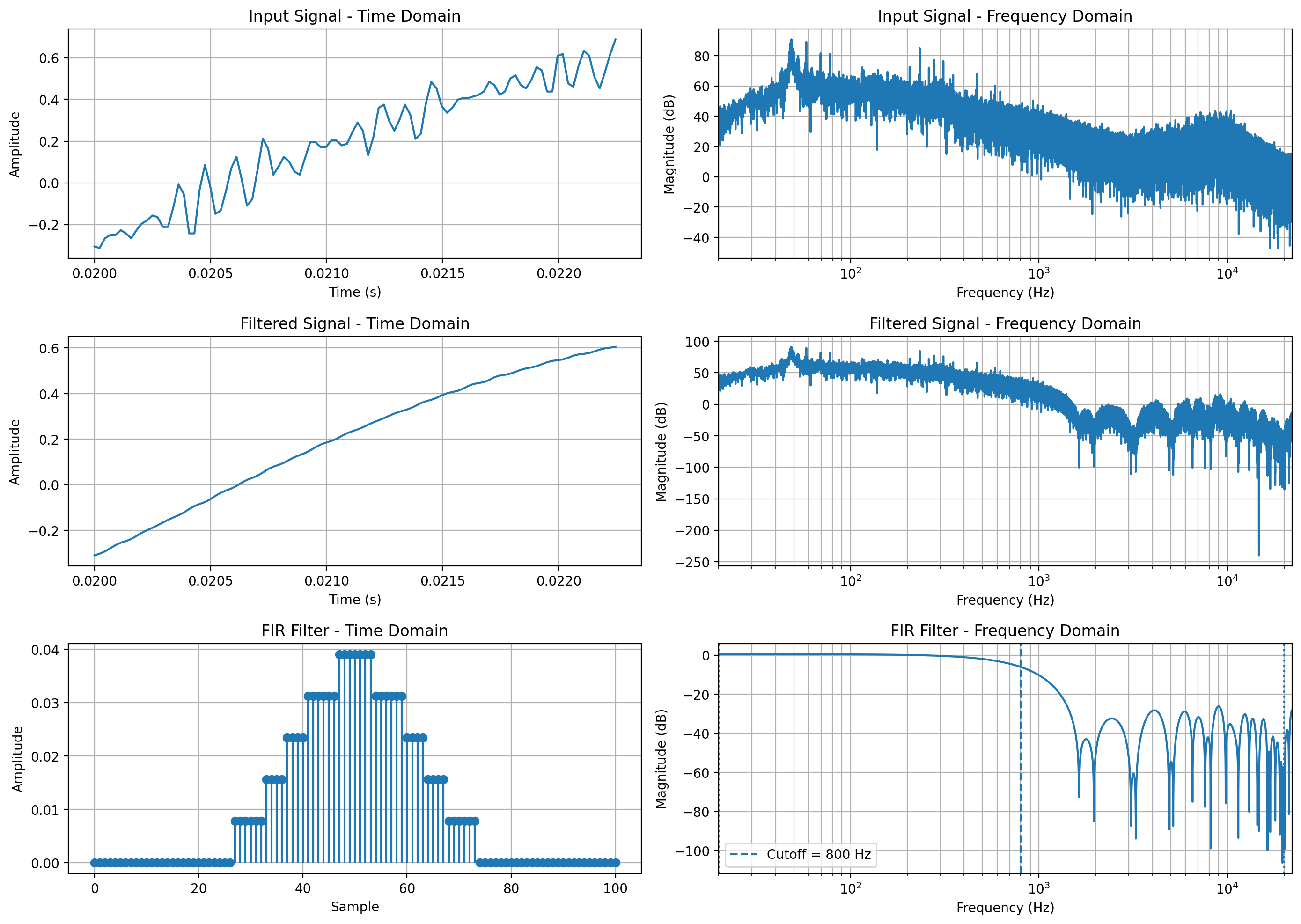
FIR Filter on FPGA to extract bass/treble from your favorite song - A Worked example gradually built through our lectures and discussions
A fully-parallel neural network accelerator on FPGA to classify handwritten numbers - The project you will gradually build as a series of guided assignments
Simple fixed-point quantization and ReLU: Week 2 - Combinational Circuits Assignment
Adder Tree, Vector Multiply-Adder: Week 3 - Sequential Circuits Assignment
Fully-parallel dense layer, neural network, AXI-Stream: Week 4 - Practical Circuits Assignment
Full system on FPGA with UART RX & TX, Python serial to send/receive input/outputs: Week 5 - FIR Filter Example Project
Course Material
Repository: github.com/abarajithan11/digital-design
Our designs: