AI Engine Experiments
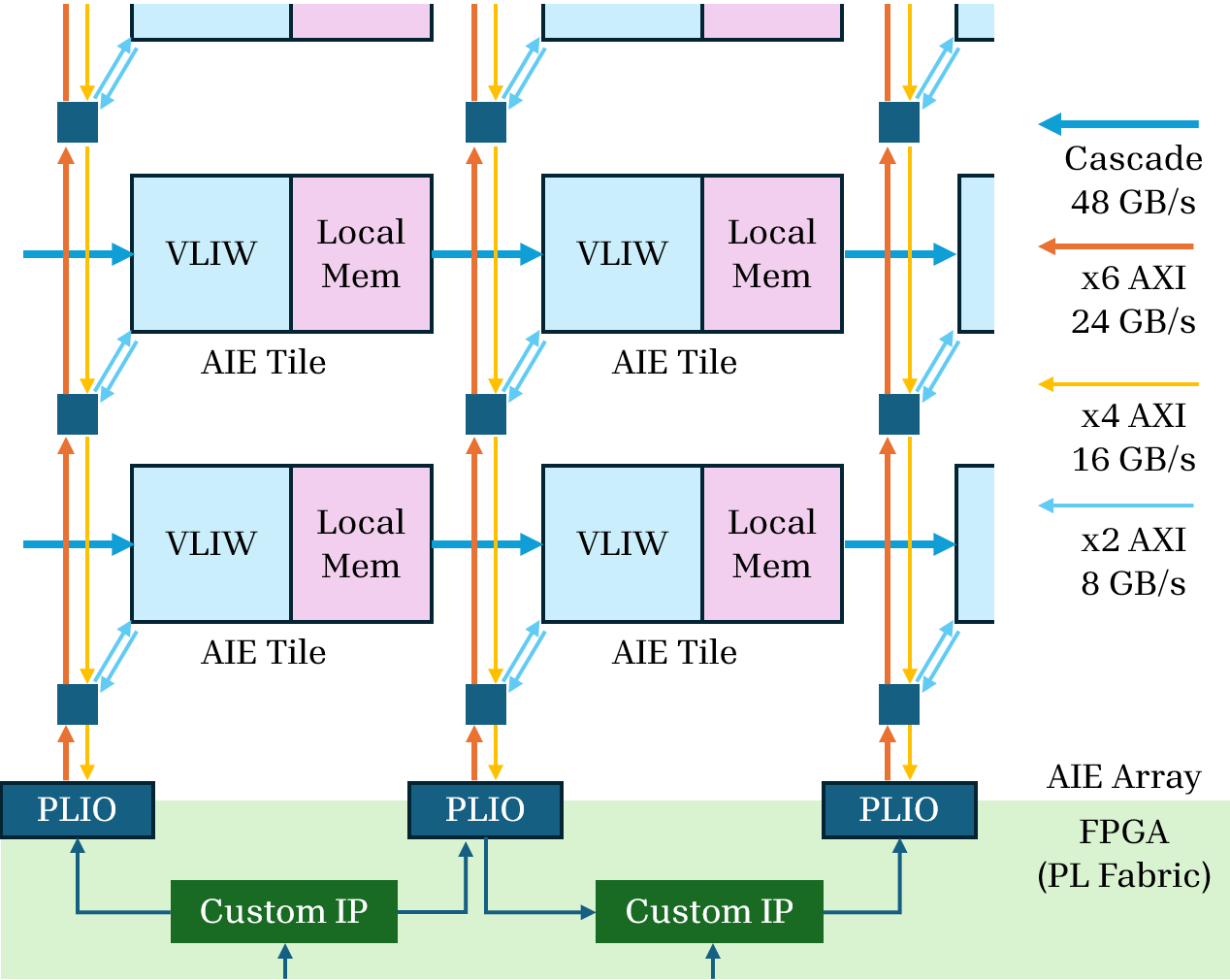
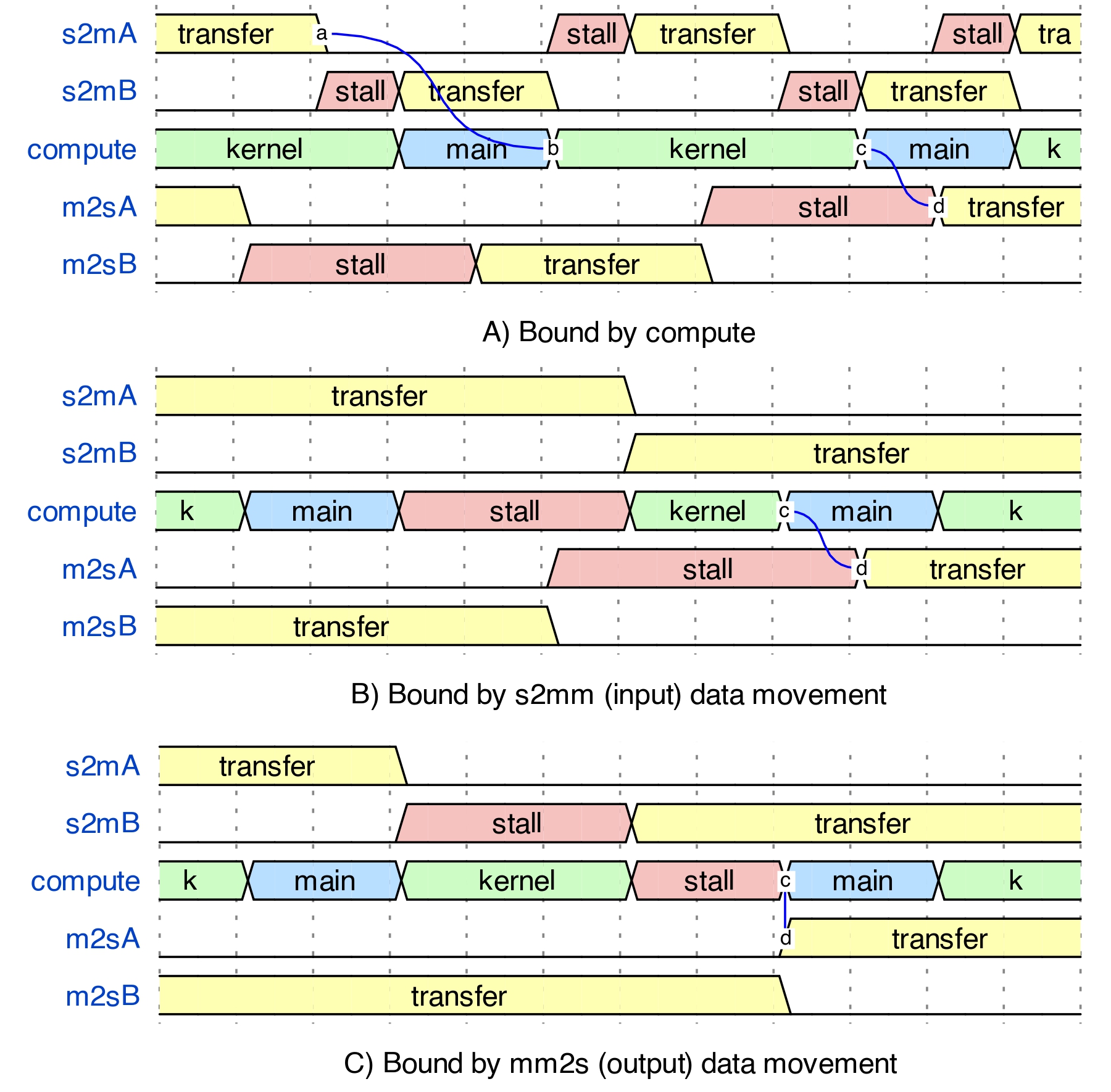
AMD AI Engine development usually involves three pieces:
- Kernel code (C++)
- Graph code (C++ or Python)
- Host code (C++ or Python)
For kernels, I have explored the lower-level side of the stack:
- Intrinsics: direct programming of AIE vector/MAC operations
- APIs: C++ wrappers around intrinsics from AMD
For graph design, the options are:
- Vitis graph flow in C++
- MATLAB/Simulink-based flow
- IRON in Python
Early work: intrinsics + MATLAB
My first AIE experiments started with intrinsics + MATLAB in this repo: amd_aie_matlab.
This repo includes small matrix/vector experiments such as gemv, gemv_opt, and gemv_opt_i8, along with MATLAB/Simulink files and AIE kernel code. The flow was simple: generate test data, run the model, and compare the simulated output against a golden result.
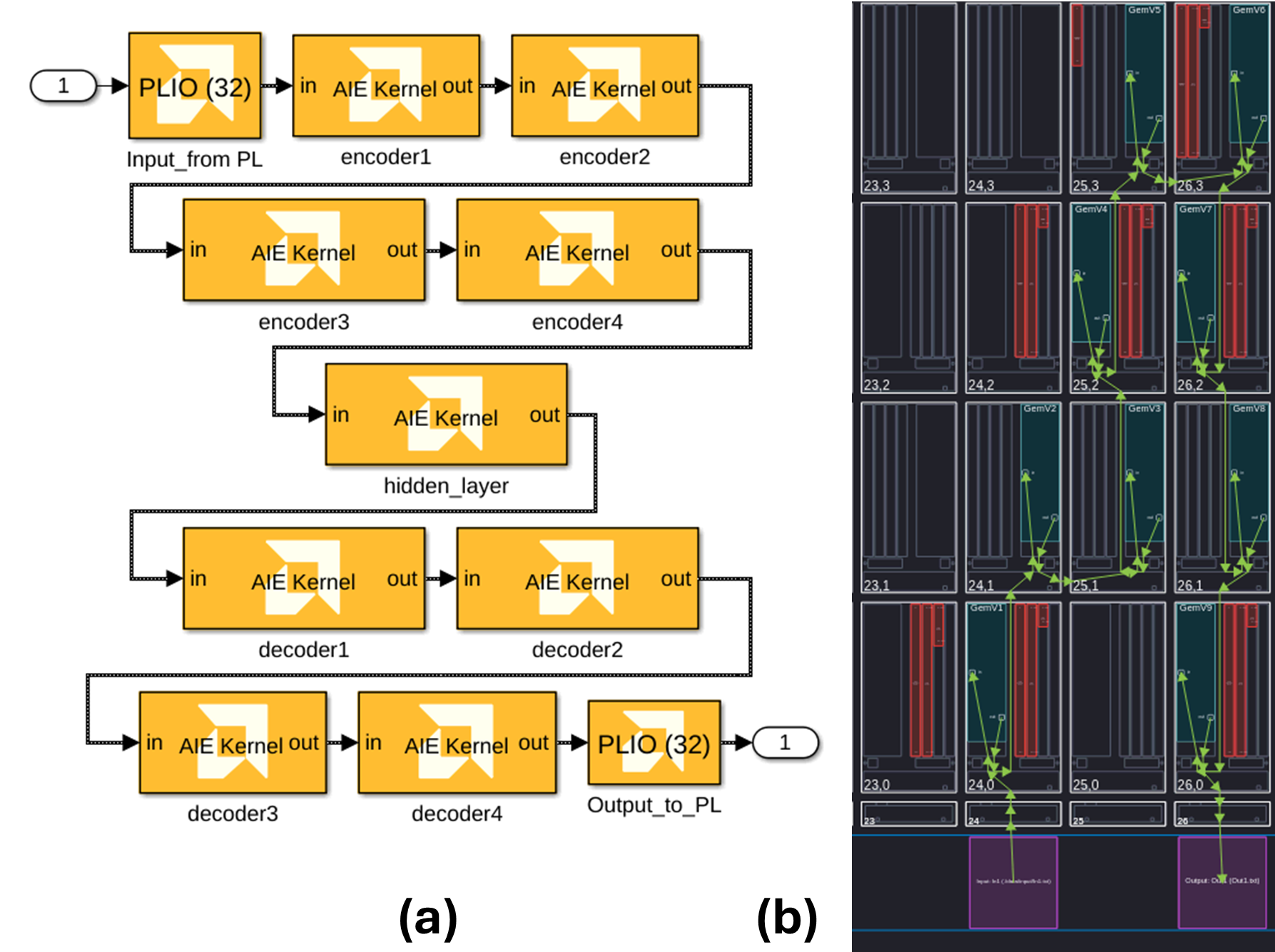
That work later evolved into this repository where some undegrad students work on optimizing intrinsics for GEMV and GEMM: aie-intrinsics-nn. This effort moved toward a more structured intrinsics-based workflow for small neural-network style building blocks. The focus was on reusable kernels and a clearer path from GemV-style experiments toward denser NN-style compositions.
Lightweight backend work for hls4ml
The next step was this repo: hls4ml-backend, for mapping small neural-network style computations onto AIE as an effort to create a backend for the popular python based tool hls4ml. It includes quickstart and run_workload.py, serving as a sandbox for experimenting with how small physics NN layers could be laid out across AIE resources.
Teaching material
I also worked as a Teaching Assistant (TA) for the AI Engine portion of Ryan’s CSE237C course. The public assignment and starter material are here:
This material introduces the AIE programming model through:
- host / graph / kernel separation
- IRON-based Python graph construction
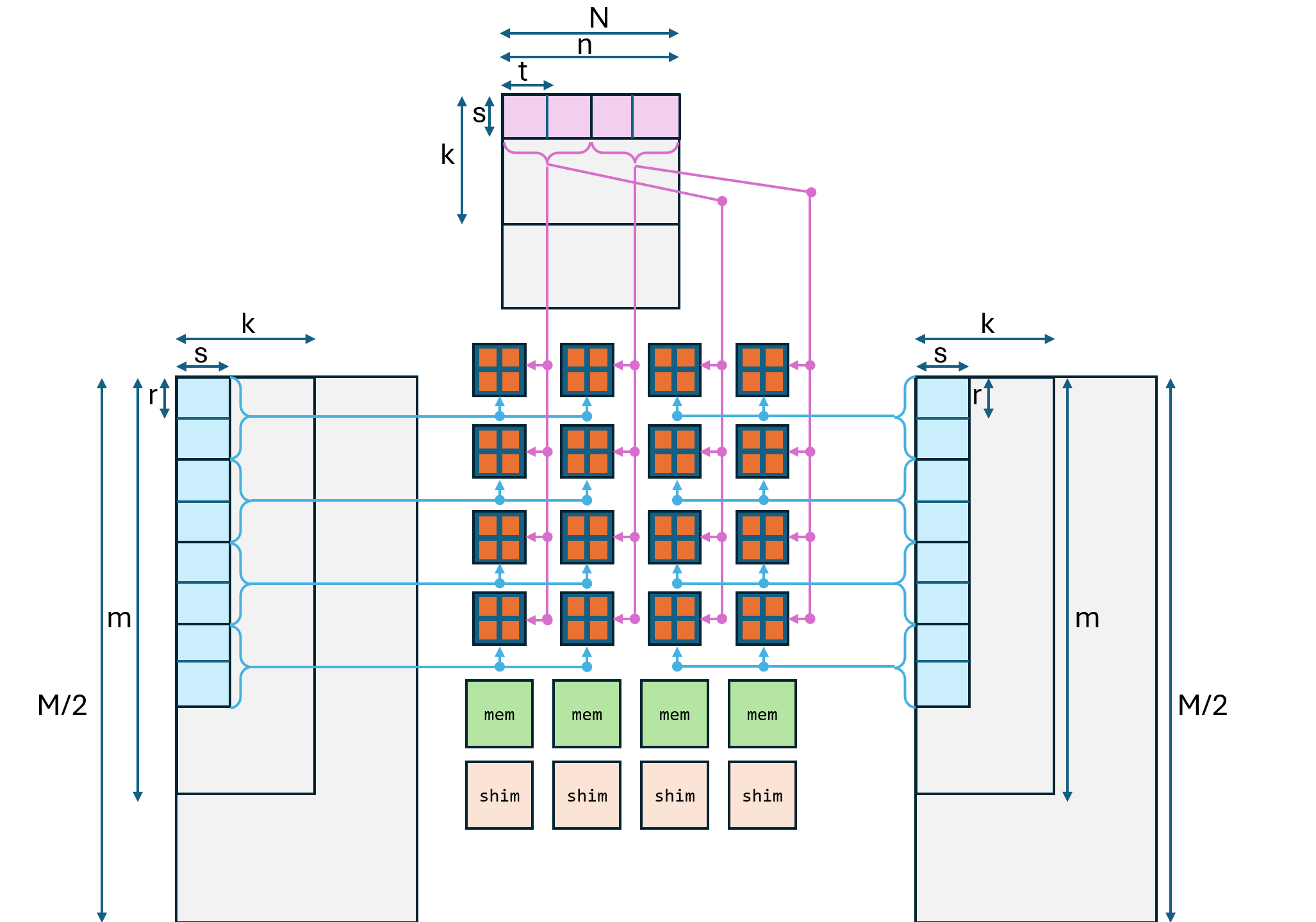
- tiled matrix multiplication
- single-core and whole-array examples
- small NN-style exercises built from these pieces
The assignment code includes files like basic_mm.py, matmul.cc, passthrough.py, and nn.py.