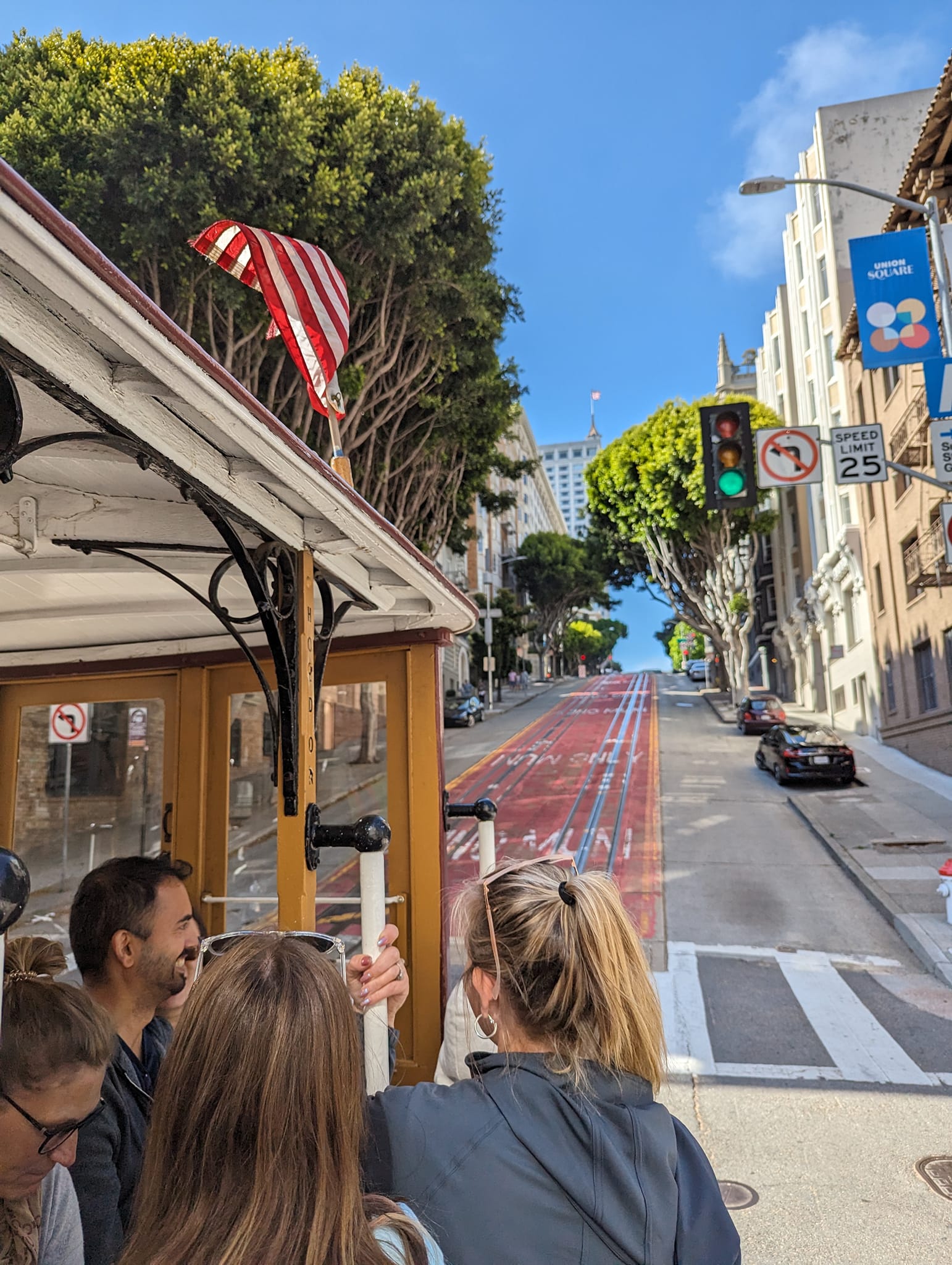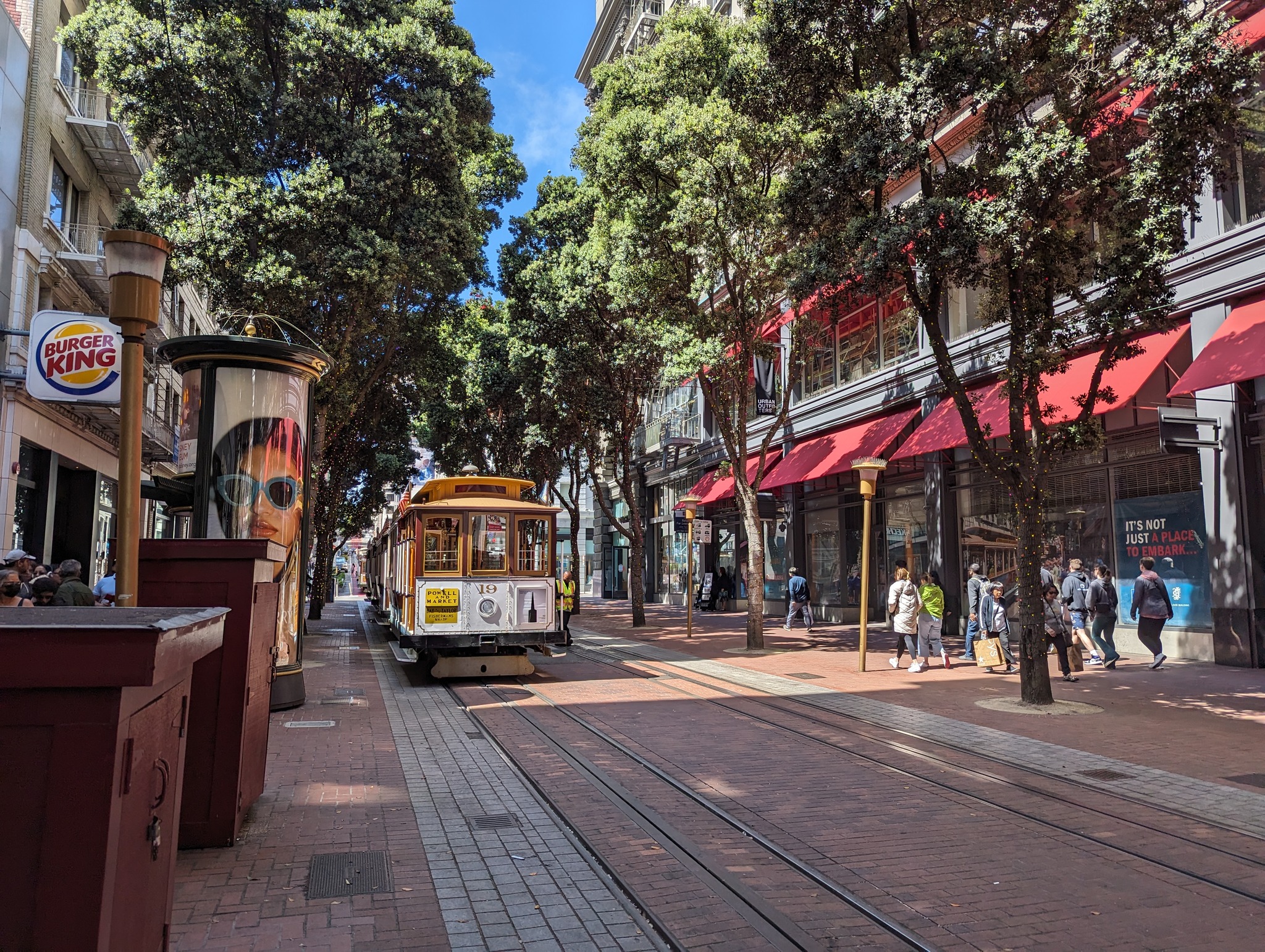
Cable cars of San Francisco
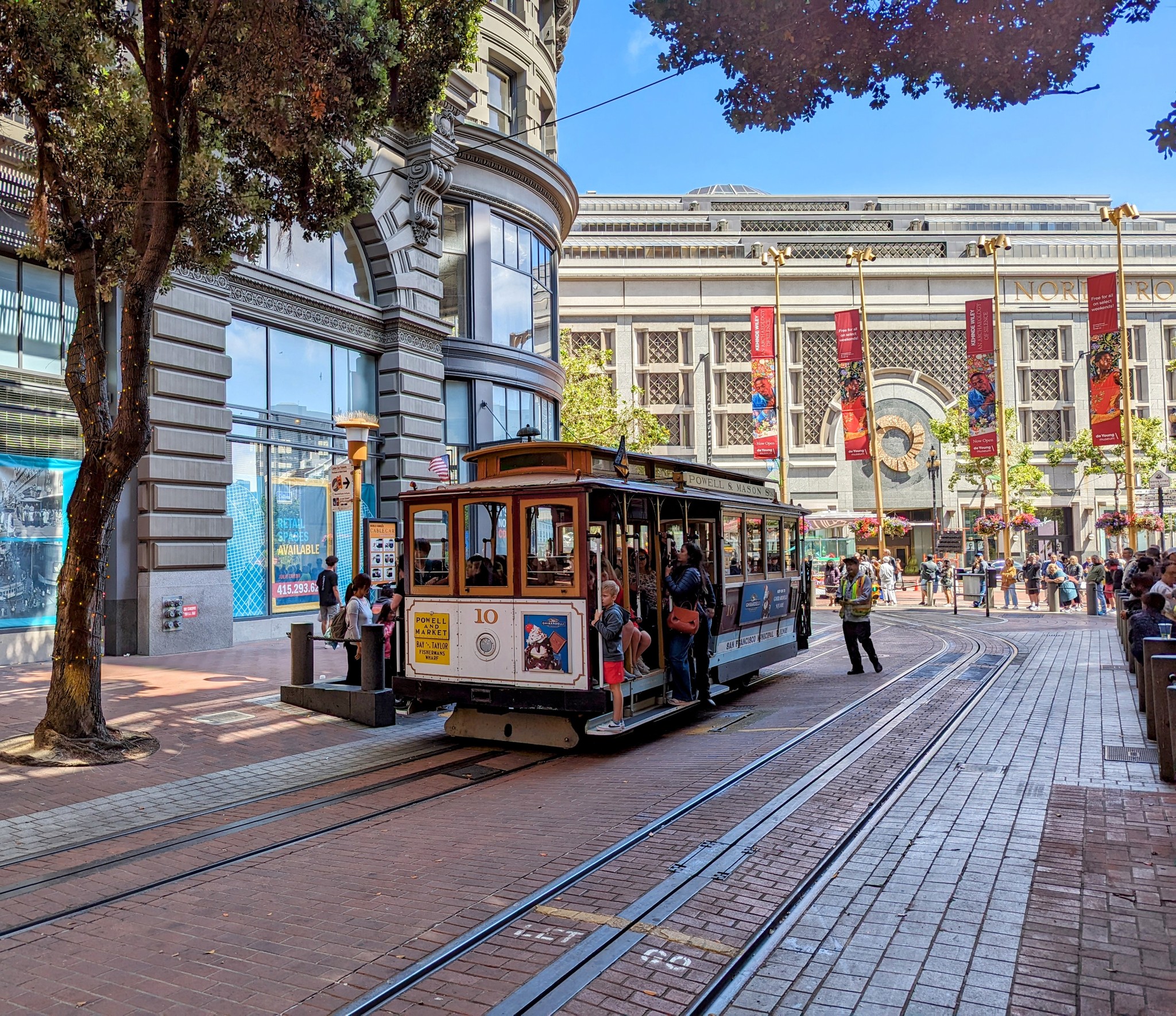
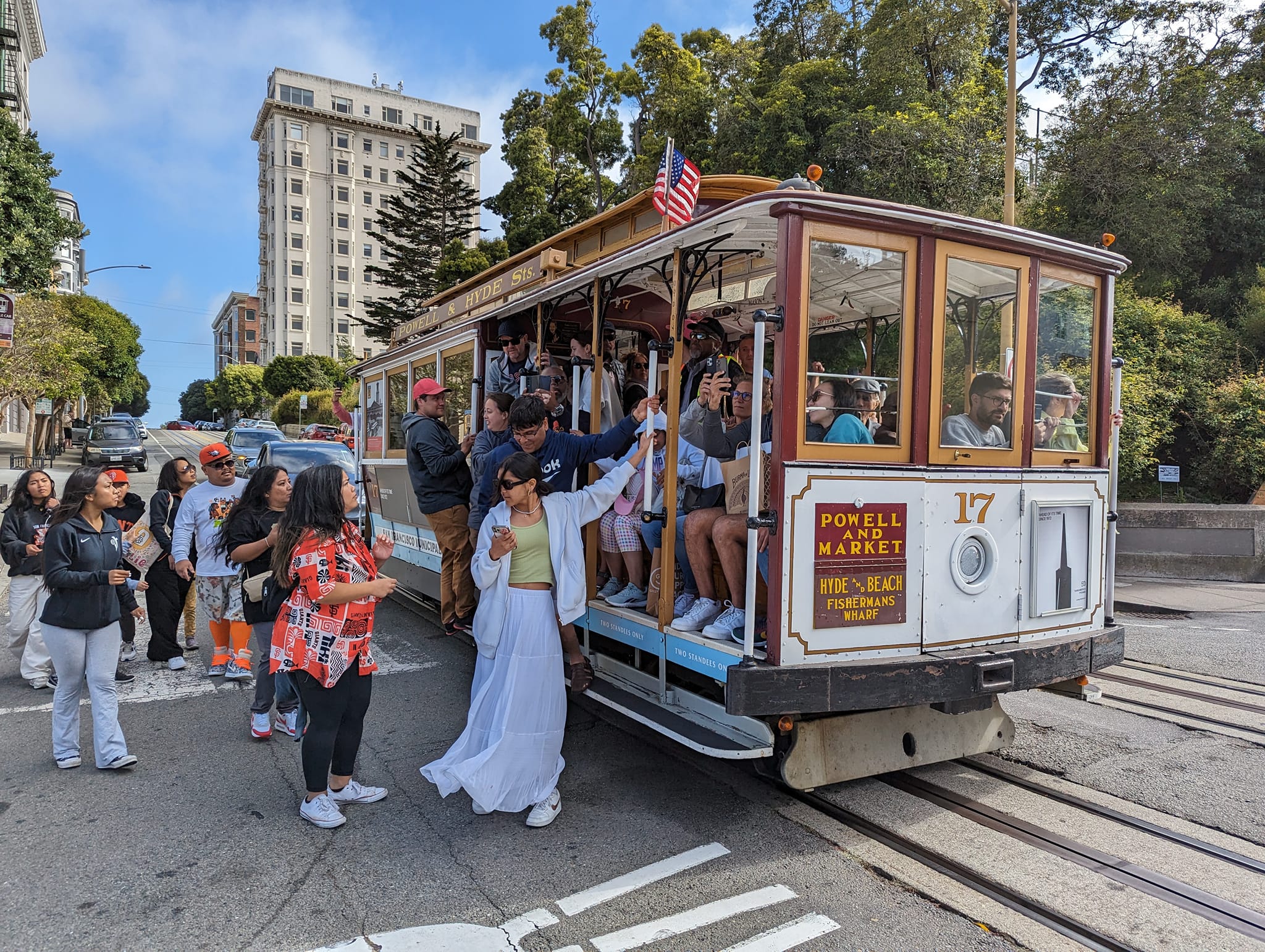
Unlike trams, cable cars do not have any motors inside them. A cable keeps moving under the streets, and the cars catch onto it, to move with it around the city.
Gold was discovered in California in 1848, starting the Gold Rush. San Francisco’s population skyrocketed, from 800 in 1848 to 34,000 in 1850. In the following 30 years, it further increased 7x. This unprecedented population boom forced the city to expand, necessitating public transport.
Horse carriages, the primary public transport of that time could not climb the hilly streets of San Francisco. Horses died within 4 years and resulted in tons of poop and urine that made the roads slippery. Steam engines were noisy and scared the horses. Electric & steam cars also could not climb the hills; their wheels simply spun in place.
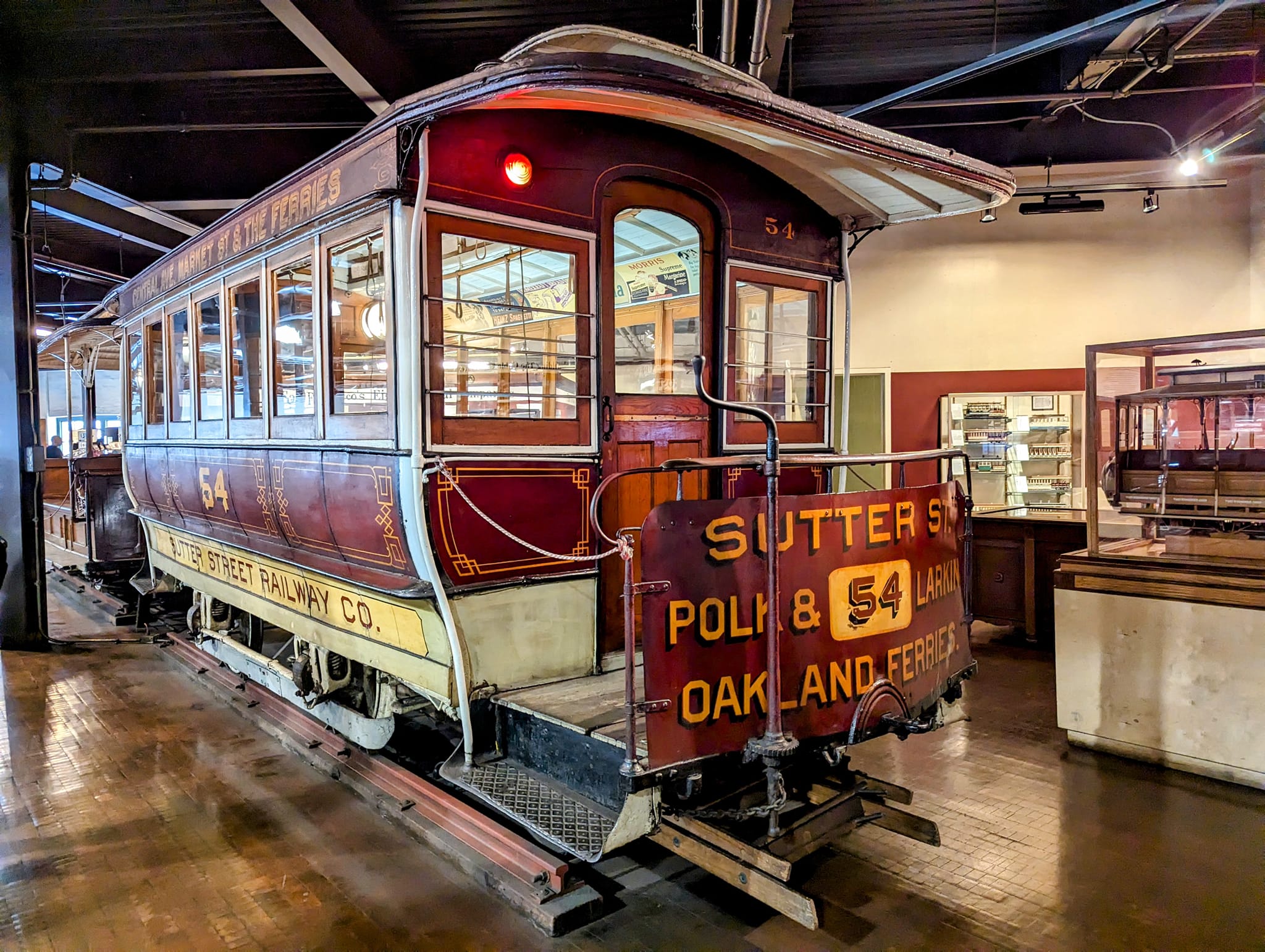
Cable car system was designed by Andrew Smith Hallidie, as the solution to all this. He was a British immigrant engineer specializing in making ropes for mining. Invented in San Francisco, this system was quickly adopted around the world in New York, DC, London, Sydney, and elsewhere.
How does it work? A central station with a steam engine keeps pulling a cable. The cable runs under the streets, through the entire city. The cars have an extension that goes under the street. As the operator clamps down, the extension grabs the perpetually moving cable. The car moves along with the cable. This way, the cars are literally pulled up the hills.
Rest of the world adopted newer technologies such as buses within a few decades. But the unique geography of San Francisco made cable cars viable for a century. In 1950s, the technology was finally outdated, and the city govt wanted to replace it with more advanced buses. But activists kept protesting, filing petitions for nearly 30 years, finally convincing the govt to revamp the whole system and keep it alive & functional as a historical artifact.
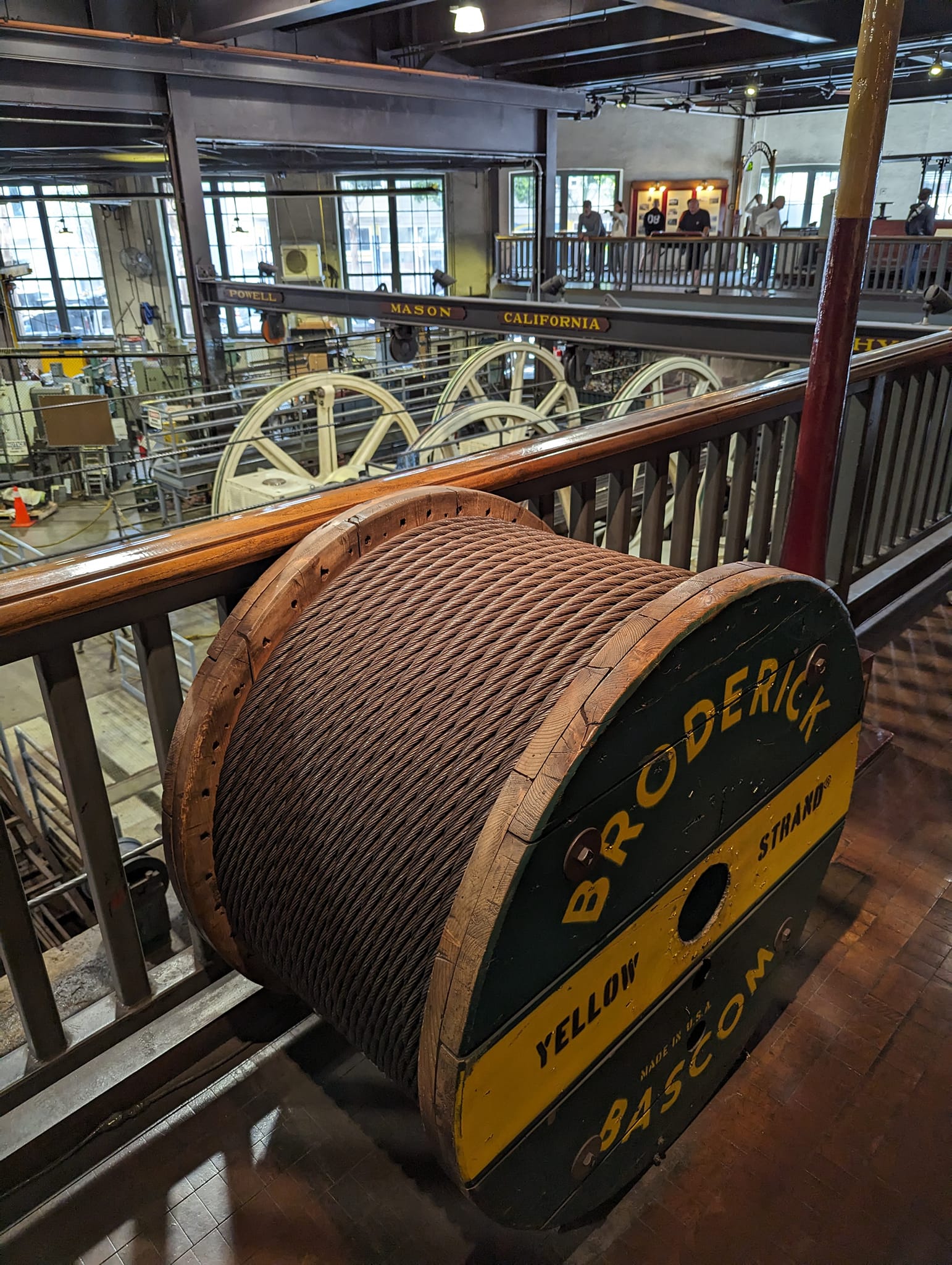
They moved all the stations into one building and made the system electric. Today, the building pulls the cables for 4 different lines across the entire city, while also serving as the city’s cable car museum.
The cables are made of thick steel strands tightly wrapped around a natural fiber core. They take a lot of wear and tear and are replaced every 75 days on average. Sensors under the roads monitor the cables for broken strands. When the damage is significant, the cable is stopped when the part reaches the museum and repaired overnight.
Cable cars are a must-see fragment of history, unique to San Francisco. Make sure to check them out when you’re there.